Linked to via boingboing, I couldn’t pass up showing this book. Excellent gift material for any dad. Even I would like this, although I already am the coolest dad on the block.

[tags]Coolest dad on the block, Stuff I want[/tags]
The most valuable supply of worthlessness on the web
Linked to via boingboing, I couldn’t pass up showing this book. Excellent gift material for any dad. Even I would like this, although I already am the coolest dad on the block.
[tags]Coolest dad on the block, Stuff I want[/tags]
Since every other damn site on the intarw3b is publishing this – an online file format conversion tool
A small graph showing the party breakdown by age, according to exit polls.
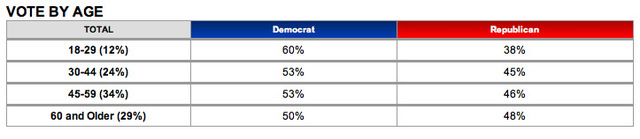
[tags]Exit polls show party breakdown by age[/tags]
Get toys for the geek in your life
Participating in the worldwide task of protecting flyers from implausible security risks, screeners at an Auckland airport denied a diabetic man the right to take his clearly labeled insulin on a plane with him. Thank goodness all the other passengers were spared the risk of a man preventing himself from suffering severe medical problems.
Mr Russell said check-in staff at Auckland Airport told him he could not take his medication on board because it was dangerous.
When flight crews found out that Mr. Russell was having medical problems but that he had been denied the right to take his medicine on the plane with him, they were upset with airport screeners and worked to give him what care they could.
He started feeling ill during the flight last month and called a flight attendant.
“They asked where the insulin was, and they weren’t very happy when they found out I wasn’t allowed to bring it on board.”
Mr Russell praised cabin crew who tried to keep him conscious and gave him oxygen until they arrived in Christchurch.
But he fell into a coma shortly before the aircraft landed and spent two weeks in Christchurch Hospital.
But at least airline officials apologized
Qantas yesterday apologised to Tui Peter Russell, who had a severe attack on the plane and was in hospital for two weeks.
I just wonder how many times this sort of thing has to happen before the sheep who support the current anti-liquid, anti-traveller, screw-safety-but-put-on-a-good-show for folks-who-don’t-realize-this-is-not-security “security” will accept that the false positive rate for this security method exceeds the old way’s false-negative rate by such a huge margin that we are likely to lose more lives to this than to actual attacks. I don’t understand how people can support putting human lives at risk every day because doing so might (but probably won’t) prevent an attack every few years (or hell, let’s say every few months, which still leaves the lives risked far worse with current security than with old security).
The story isn’t totally negative, though.
Mr Russell said Qantas had offered him a free return flight from Auckland to Christchurch, but he also wanted help from the airline to recover $500 in hospital and medication bills.
[tags]Liquid security threat causes diabetic to suffer coma, Thanks for keeping the water off the plane – I’ll fly again after I get out of the hospital[/tags]
A tag cloud of words used by all US Presidents in speeches, 1776-2006
Hmmmm, I haven’t had a good Digital Restrictions Management (DRM) story in a while. Let’s fix that now.
Microsoft, 2 years after launching MSN music store, is now moving its anti-consumer-technology efforts into making the Zune as unfriendly as possible for restricting consumer rights. Continue reading “Microsoft – Bought DRM music from us? Fools!!!”
While perusing boingboing today, I followed a link to a site called wikidumper, which tracks some of the best rejected content from Wikipedia in case it should eventually be removed. The first item that stopped my reading was this post title Hologram theory. According to hologram theory, there were no planes on 9/11. This is really one of the more worthwhile posts I’ve ever put up. You really should read on… Continue reading “Hologram theory”
Dog sex at noon taxes God
Others available. (via boingboing)
[tags]Palindromes[/tags]
Get a good look at this.

This shirt is illegal according to a customs officer in Birmingham – a threat of arrest was made, in fact. Of course, I continue to be right that this fake security we put up with is bogus, but even with stupid incidences like this, people still disagree with me.
[tags]Pink gun profile on shirt illegal, Customs officer can’t tell the difference between a real gun and a 3 inch piece of pink fabric?[/tags]
I don’t know how I missed this when it first happened, but apparently Ann Coulter is facing possible felony charges after it was discovered earlier this year that she voted in the wrong precint using the wrong home address (and verifying her incorrect address as correct). Normally, I wouldn’t care about this nearly as much as whether someone voted more than once in an election. Given all the hateful lies (one of many good resource on blogspot) Coulter spews about liberals and things like their hatred of America and their fraudulent voting methods, I felt it necessary to point out that it’s not only the liberals who have wrongful votes happening at the polls. Oh, and Coulter will not help in the investigation, which I suppose is understandable given our protection against self-incrimination (found in article V of that Bill of Rights thing that some conservatives seem to want to discount these days and liberals won’t stand up to them)
Conservative columnist Ann Coulter has refused to cooperate in an investigation into whether she voted in the wrong precinct, so the case will probably be turned over to prosecutors, Palm Beach County’s elections chief said Wednesday.
Knowingly voting in the wrong precinct is a felony punishable by up to five years in prison.
Elections Supervisor Arthur Anderson said his office has been looking into the matter for nearly nine months, and he would turn over the case to the state attorney’s office by Friday.
. . .
In July, Anderson said, he received a letter from Coulter’s attorney, Marcos Daniel Jimenez D’Clouet. The letter said the attorney would only discuss the matter in person or by telephone because, he complained, Anderson had given details to the media. Anderson said the matter had to be discussed in writing.
See, we all have things we do wrong. Just most of us aren’t so publicly well known that when we accuse others of something and then do it ourselves, we don’t get caught.
[tags]Ann Coulter facing possible felony charges, Those voting laws don’t apply to me[/tags]
While watching a number of videos on e-voting insecurities and reading up on the state of this threat to our democracy (an article on this will be here soon), I get wrapped up in reading Andrew Kantor’s web site (warning: very liberal viewpoint shared freely). I knew about him before hitting his site, as I’ve read some of his techie and political writings before. One very interesting article of his is this “Geek to me” article written back in 2002. I think it is worth sharing just because of the clear truth that is contained in it:
People are always trying to predict the hot new technology, either to get on the bandwagon early, to know what stocks to buy, or to get jobs as columnists and consultants. Books have been written about how to predict what’s going to be the Next Big Thing, or simply what makes that big thing big — Malcolm Gladwell’s The Tipping Point comes to mind.
But there is a recognizable pattern to which technologies make it into the mainstream and which don’t. Here’s my theory: To be successful commercially, a technology must first go through a Geek Acceptance Stage. If the geeks like it, it’s only a matter of time before it’s at Wal-Mart. That’s because geeks get hold of an idea, play around with it for a while, and eventually build enough of a base of support for it — not to mention word of mouth — that it makes its way into the mainstream.
. . .
Look at some other hot technologies and you’ll realize that what’s in today’s business world was first in the hands of the geeks. The Internet, once strictly a haven for academics and techies — people willing to configure terminal-emulation software and 300-baud modems, and learn cryptic programs with names like vi, emacs, rn, pine, and elm.
Once it passed the Geek Acceptance Stage, the Net was ready for prime time, and had enough of a backbone (literally and metaphorically) to support a growing number of users. But if the geeks hadn’t found the Net and found it good, we may never have had the likes of Yahoo (another geek project) . It was the geeks who found ways to organize information with Gopher and, later, the World Wide Web. It was geeks who came up with the now-ubiquitous @ sign, the domain system (with its ups and downs), IP addresses, and so on.
The geeks have spoken with other technologies. MP3 was a relatively obscure music format that geeks used to exchange music files. But once reliable players and usable CD rippers began to circulate, the MP3 “market” took off.
If you read his article and think about it, you’ll see plenty of other instances where geeks started with something, accepted it as worthy of use, and it spread to the rest of the world. Kantor’s final geek-accepted tech point is Linux. We’ll have to watch over the next few years to see if his hints that Linux really will become commonly accepted and used holds, but I think he makes some good points. And one thing he didn’t mention specifically that is worth thinking about it the open-source/freeware/free software movement. It started out in the geek community, and after sufficient percolation, it has pushed up to more mainstream levels. Mozilla, AbiWord, Apache, freshmeat, and more are all examples of now well-known and well-used free software tools or resources that are growing at a pace greater than their non-free software equivalents. And that idea is a huge part of what set Linux up for the success it has seen so far and what I believe could well push it in to heavy mainstream acceptability in the next 3-6 years.
[tags]Geeks decide the future?, Andrew Kantor’s tech writings[/tags]